
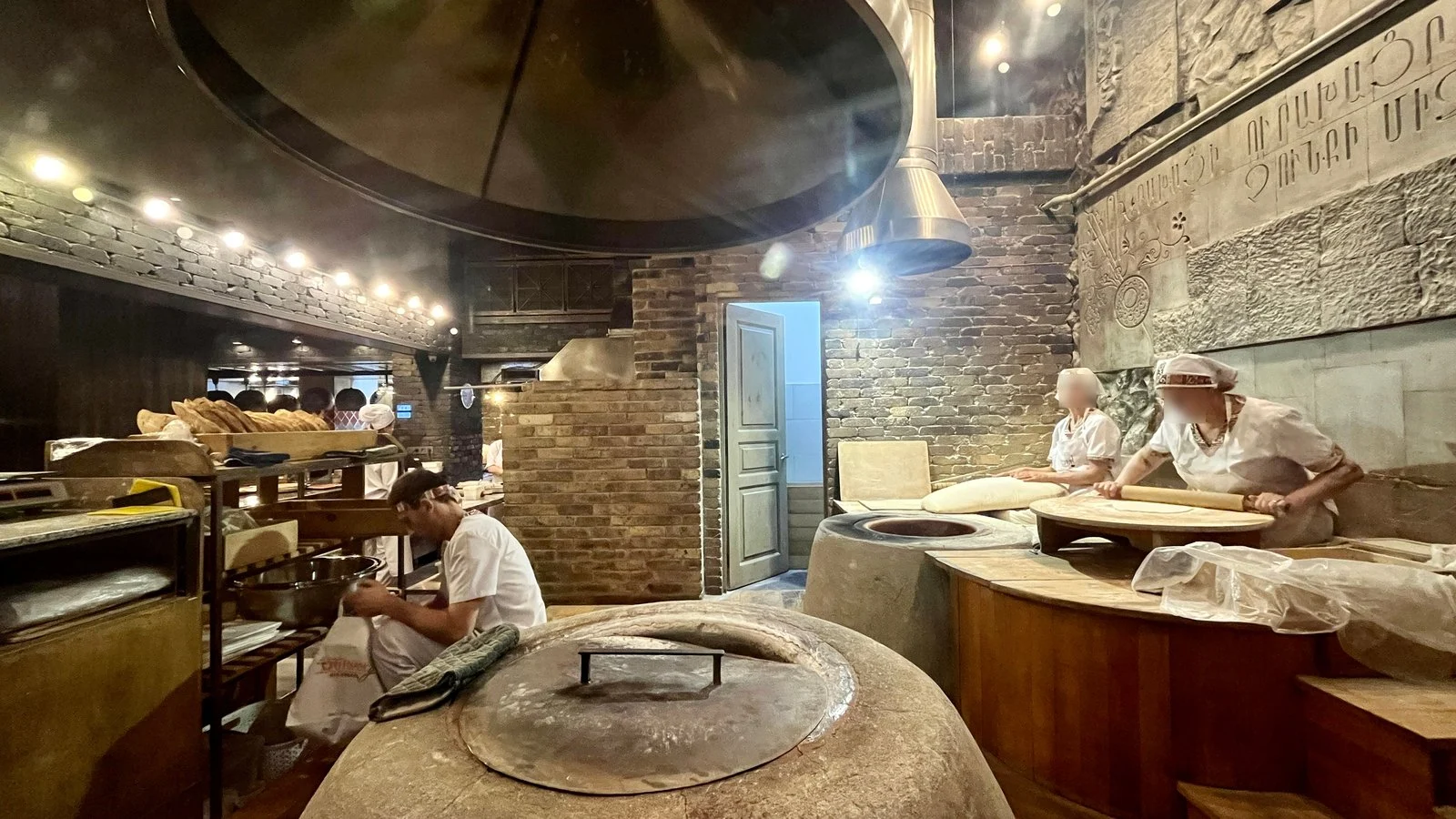
A cornerstone of the Armenian table is lavash, a flatbread rolled out so thin it's almost like paper. In 2014, UNESCO recognised it as Intangible Cultural Heritage — honouring not just the bread but the knowledge and community life around making it. Here's what lavash is, the tonir oven and communal craft behind it, and the clever way it's stored.
What lavash is
Lavash is a thin, soft flatbread made from flour, water and salt. The name is said to mean ‘well stretched’ in Armenian — fitting, since it’s rolled large and thin before baking. Fresh from the oven it’s soft and pliable, perfect for wrapping food.
Dried, it keeps for a long time; sprinkle it with water before eating and it turns soft again — a built-in piece of preservation know-how. Some archaeological views hold that lavash was baked in the Armenian Highlands as far back as the 3rd millennium BCE, making it a bread with a very long history.
The tonir oven and a communal craft
Making lavash is often a group effort, traditionally by women. They knead the dough, roll it thin, stretch it over a padded board called a rabata, and slap it onto the inner wall of a tonir — a cylindrical clay oven set into the ground and fired with wood.
A tonir can reach around 400°C, and the dough bakes in just seconds before it’s lifted out with an iron rod. The tonir is more than a tool: it stands for warmth, family and home. This whole web of skill and tradition is what UNESCO listed in 2014.
How it's eaten and kept
Fresh and soft, lavash is wrapped around cheese, herbs, vegetables or meat — it even doubles as an edible plate in Armenia.
Its keeping quality is remarkable: dried lavash lasts a long time, and a quick sprinkle of water under a cloth brings back its softness. In an age before refrigeration, that knowledge helped sustain everyday life.