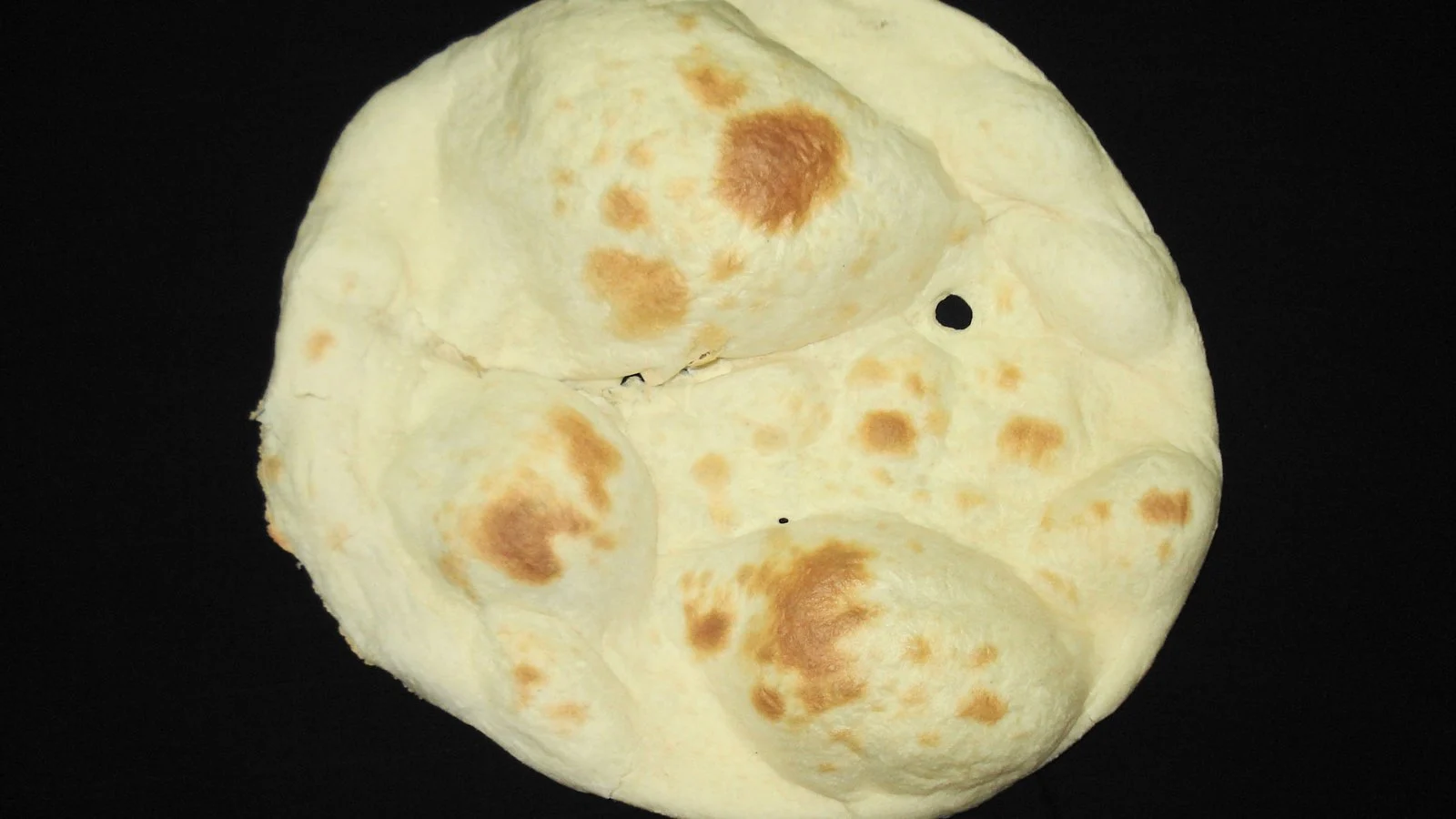
On the Iranian breakfast table, one of the staples is barbari (nân-e barbari) — a long flatbread that is, despite being flat, among the thickest in the world. Its golden surface carries long grooves and a scattering of sesame or nigella (black caraway). Here's what barbari is, the technique behind its glossy skin, and where its name comes from.
What barbari is
Barbari is a yeast-leavened flatbread — flat, yet thick, crisp outside and soft within. It’s one of the four main Iranian breads (alongside sangak, taftoon and lavash), and among the most widely eaten in Iran. It’s typically a breakfast bread, served with a feta-like cheese called Lighvan, plus jam, cream, nuts or fruit.
Its signature look comes from the deep lengthwise grooves pressed into the dough before baking.
The grooves, the 'roomal' glaze, and a pretzel-like skin
The key step happens just before baking. The shaped dough is grooved with the fingers and brushed with a cooked flour-and-water paste called roomal, then sprinkled with sesame or nigella seeds.
That glaze helps the Maillard reaction along, giving a glossy, savoury skin reminiscent of pretzels or lye-dipped breads. The grooves aren’t only decorative: they help heat reach through the thick dough evenly and shape the bread’s chew.
Where the name comes from
Barbari is said to date to the Qajar era (the dynasty that ruled Iran from 1786 to 1925). Its name is traditionally linked to a community called the Barbars who lived around Tehran in the 19th century — more specifically, the Barbar Hazaras, who are said to have brought the recipe to Tehran.
Accounts of the origin vary and aren’t all firmly documented, so these are best taken as ‘it is said.’ What’s certain is that barbari remains one of Iran’s most beloved staple breads, baked fresh in the early hours for the morning rush.