
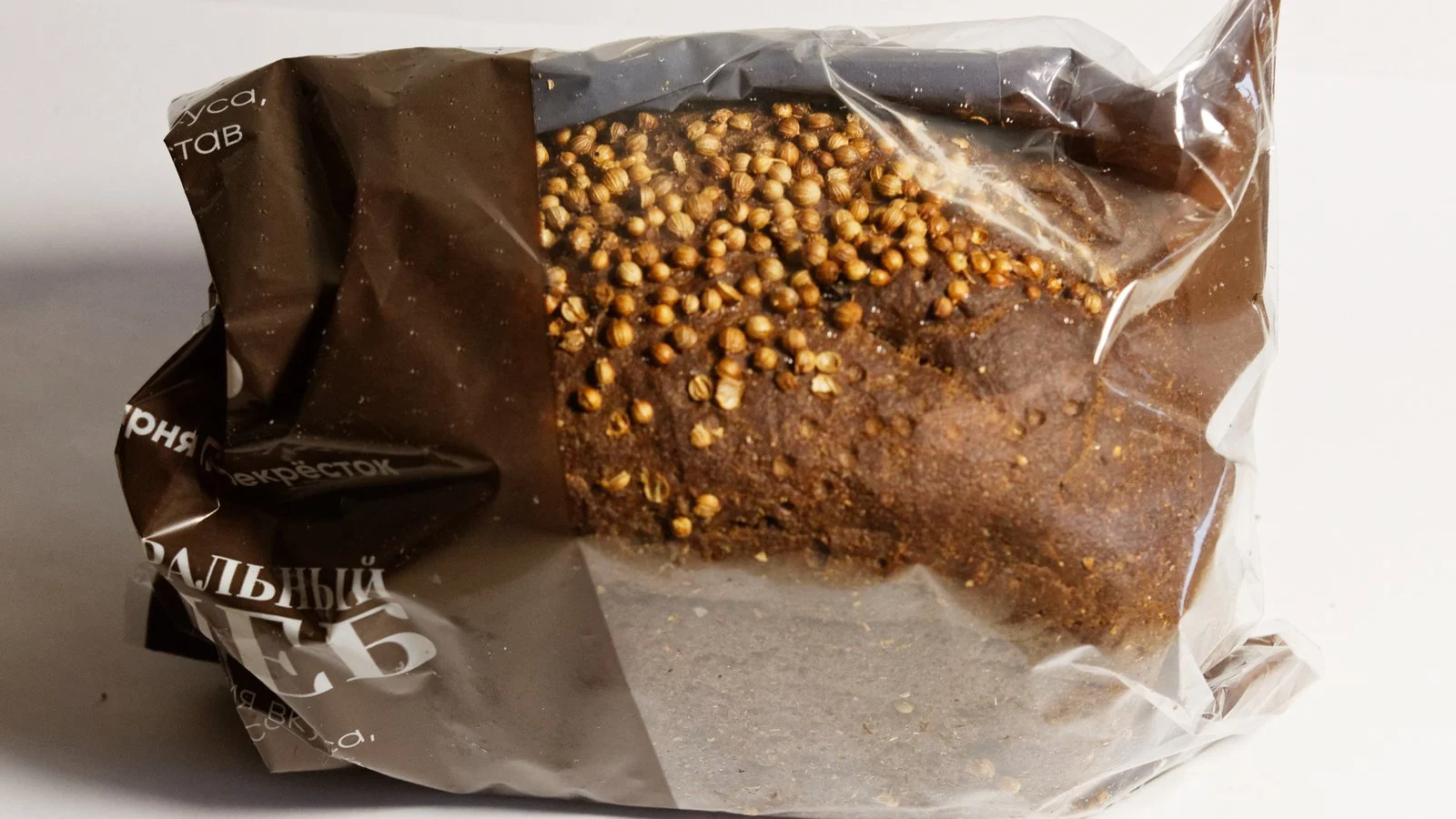
Russia's signature black bread is Borodinsky — a dark sourdough rye, sweetened and coloured with molasses and crowned with coriander seeds. Dense, faintly sweet and fragrant, it's one of the most distinctive of all dark breads. Here's what Borodinsky is, the legend and the documented history behind it, and the science of its flavour.
What Borodinsky is
Borodinsky is a dark brown sourdough rye bread. Traditionally it’s made from at least 80% whole-grain rye flour, about 15% second-grade wheat flour, and around 5% rye or barley malt. The sweetness and colour come from beet molasses; the aroma from coriander. Coriander seed is required, caraway optional.
The result is dense, lightly sweet, and lifted by the bright scent of coriander — a bold personality among black breads.
Legend versus documented history
Borodinsky’s origin is wrapped in a romantic legend. The best-known story ties it to Margarita Tuchkova, widow of a general who died at the Battle of Borodino (1812): nuns at her convent are said to have devised the bread for mourning, the dark colour standing for grief and the coriander seeds for grapeshot.
That is a legend, not established fact. Another account credits Soviet-era bakeries, with the first official GOST (state standard) recipe appearing in 1930 and the modern recipe approved at Moscow’s central bakery in 1933. What’s certain is that Borodinsky mattered enough to be defined in detail by state standards — a truly national loaf.
The science of its flavour
The dark colour and gentle sweetness come from beet molasses and from rye and barley malt, whose compounds also aid browning and toasty aroma (the Maillard reaction). The rye sourdough fermentation brings a mild tang and a moist, tight crumb.
Finally, the coriander (and optional caraway) lifts what could be a heavy rye with a bright, floral note. Sweetness, tang, aroma and colour layer together into that unmistakable slice.