
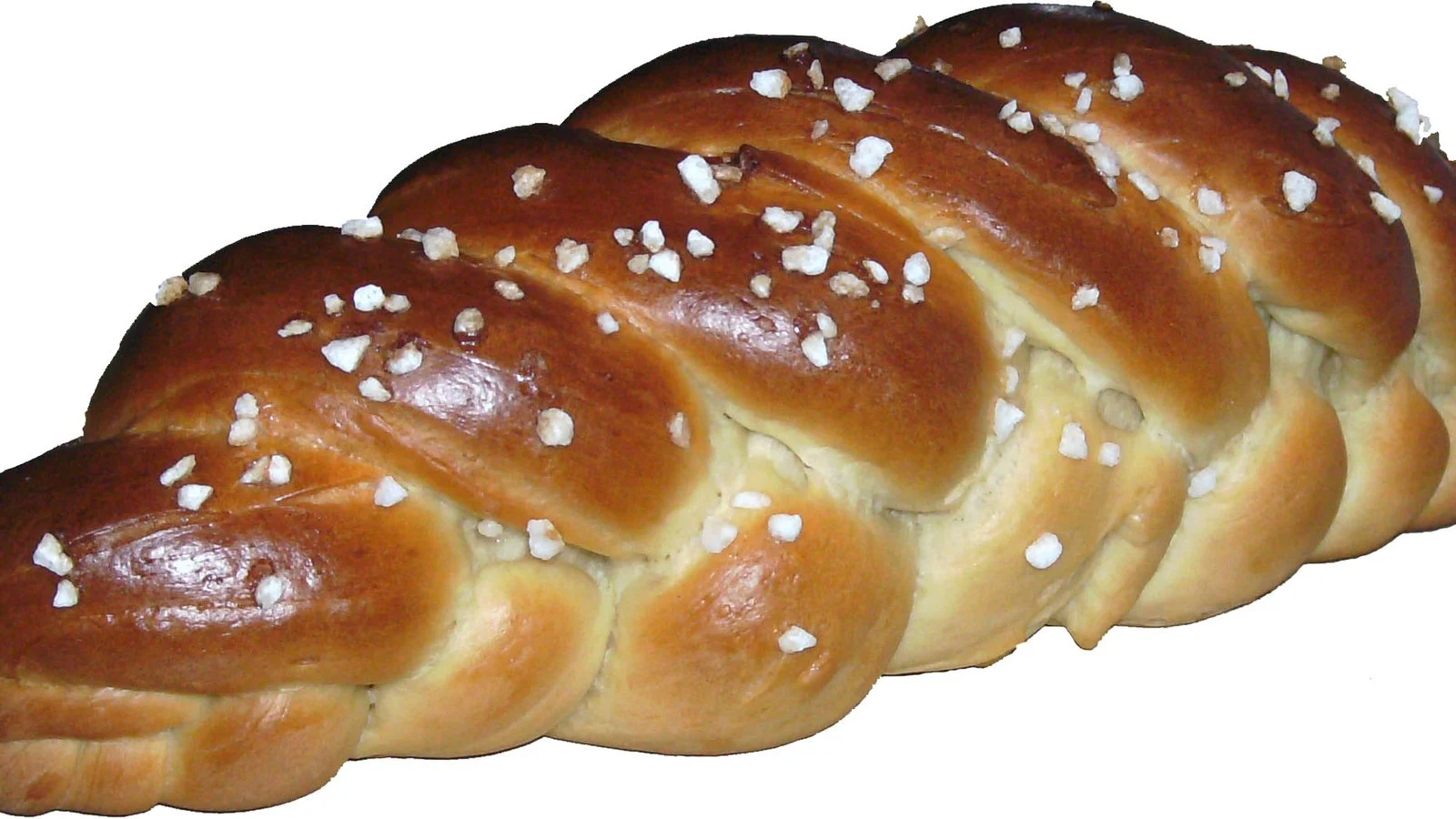
A familiar sight on the Swiss breakfast table on Sunday mornings is Zopf — a glossy braided loaf made from white flour, milk, egg, butter and yeast. It looks rich, yet it is barely sweet. Brushing it with egg (sometimes mixed with milk) before baking gives that signature golden shine. Here is what Zopf is, its regional names, and the history behind it.
Rich-looking, but not sweet
Zopf is eaten across Switzerland and also in Austria and Germany. The ingredients are simple — white flour, milk, egg, butter and yeast — and its defining trait is that, despite the rich look, it is not sweet. It resembles Jewish challah or the German sweet wreath Hefekranz in shape, but Zopf sits closer to an everyday eating bread than a pastry.
The dough is kneaded smooth, given a final proof, and baked to a deep gold. With the sugar kept low, its appeal comes from the butter-and-egg richness and the beauty of the braid.
Regional names and the braiding tradition
Switzerland is multilingual, and so are the names. In Bernese German it is Züpfe, in French-speaking areas tresse, and in Italian-speaking areas treccia — all meaning ‘braid’. In regions such as the Emmental, long braids are said to be sold by the metre (Helvetic Kitchen and others).
If you braid one at home, a two-strand braid is the easiest place to start and gives a neat result for beginners.
A little history
Stories about the origin of Zopf vary widely. Some accounts reach back before the Middle Ages, or tie it to braided hair offered at graves; these are poorly substantiated, so we won’t state them as fact.
Within what can be traced, there are accounts of Bernese bakers making the bread, of a period when Züpfe could only be baked on certain feast days, and of bakers seeking the right to bake it year-round (Helvetic Kitchen). Details differ between sources and aren’t all confirmed by primary records, so we share them as ‘it is said’. What is certain is the cultural fact that Zopf remains Switzerland’s ‘Sunday-morning bread’ to this day.